

Astronomical Events – April 2026: Comets, Lyrids, Moon Phases and Sky Maps
April is one of the most rewarding observing months of the year in the Northern Hemisphere. The spring constellations dominate the evening sky, and 2026 brings two notable comet passages: C/2026 A1 (MAPS) and C/2025 R3 (PanSTARRS).
The annual Lyrid meteor shower and a well-timed New Moon phase further enhance the month’s observational potential. Below is a structured and technically oriented overview of the key astronomical highlights.
April 2026 at a Glance
- April 2: Full Moon
- April 17: New Moon (optimal for faint objects)
- April 21–22: Lyrid meteor shower peak
- Early April: monitoring C/2026 A1 (MAPS)
- Late April: improved visibility for C/2025 R3 (PanSTARRS)
Moon Phases and Observing Strategy
The Moon cycle makes the second half of the month particularly attractive. Following the New Moon on April 17, darker evening skies provide improved conditions for galaxies, comets and faint deep-sky objects.
- April 2: Full Moon
- April 10: Last Quarter
- April 17: New Moon
- April 24: First Quarter
Comet C/2026 A1 (MAPS)
C/2026 A1 is classified as a sungrazer, meaning it passes extremely close to the Sun. Such trajectories may result in significant brightening, but also carry a real risk of fragmentation.
Observing conditions are challenging due to low altitude and proximity to the Sun. Careful planning with updated ephemerides is essential.
Comet C/2025 R3 (PanSTARRS)
C/2025 R3 is considered the more promising target for traditional observing. Favorable geometric conditions in late April may enhance apparent brightness.
Actual visibility depends strongly on atmospheric transparency, altitude above the horizon and local light pollution levels.
The Lyrid Meteor Shower
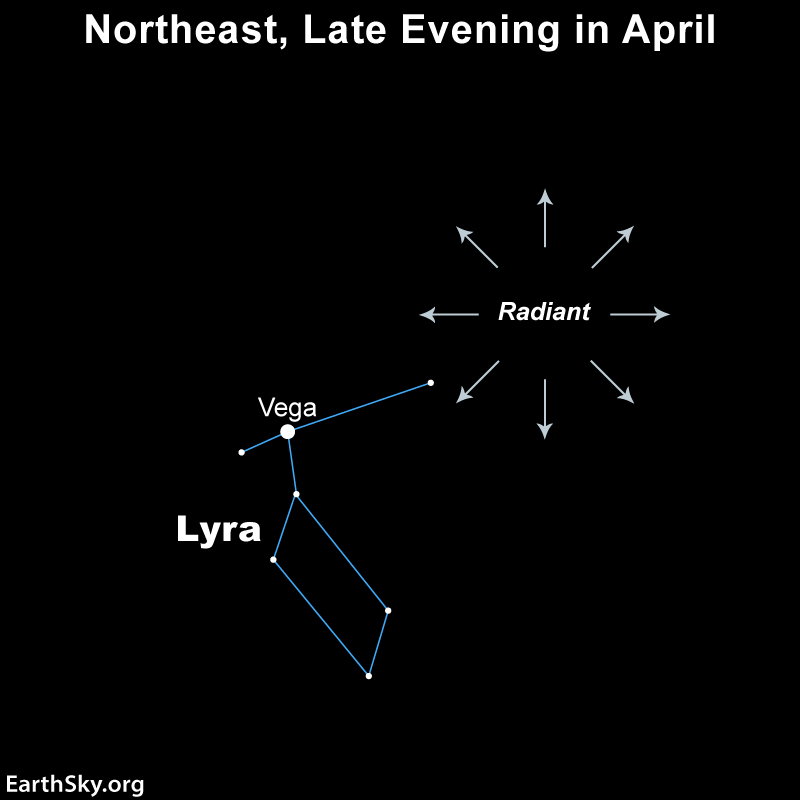
The Lyrids reach maximum activity during the night of April 21–22. Under ideal dark-sky conditions, the zenithal hourly rate may reach approximately 15–20 meteors per hour.
Best viewing occurs after midnight, when the radiant climbs higher. A dark observing site and at least 30 minutes of dark adaptation are recommended.
Deep-Sky Highlights: Galaxy Season
April is traditionally known as “galaxy season.” The constellations Leo and Virgo contain rich extragalactic regions ideal for visual and photographic exploration.
- M65 / M66 in Leo
- Globular cluster M3
- Virgo Galaxy Cluster region
Common Observing Mistakes to Avoid
- Treating comet brightness predictions as guaranteed values.
- Ignoring horizon altitude and atmospheric extinction.
- Failing to plan around Moon phase.
- Underestimating mechanical stability in low-altitude astrophotography.
April 2026 combines recurring celestial events with potentially remarkable comet passages. Accurate planning remains the key factor in achieving successful observations.