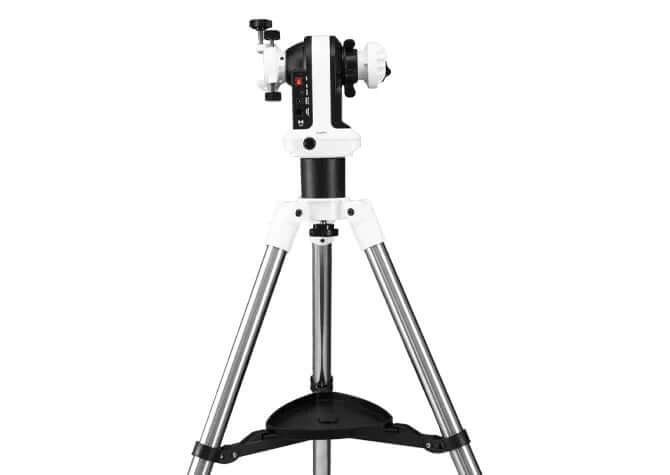
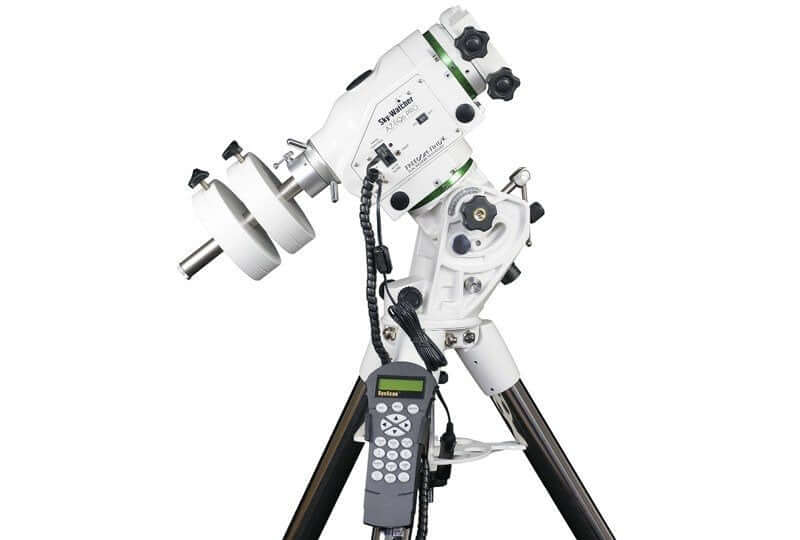
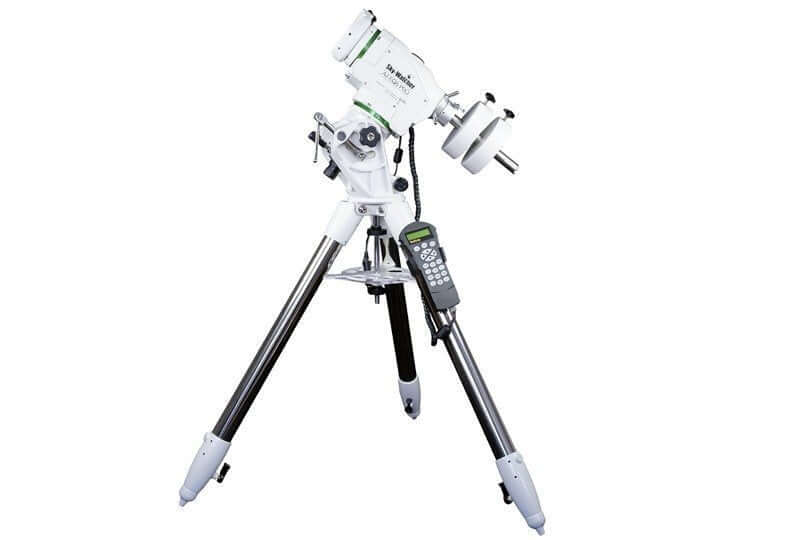
The astronomical mount is the component that determines the quality of the entire observing session: it supports the optical tube, ensures its stability and allows pointing, tracking and — in the case of motorised mounts — automatically following celestial objects by compensating for Earth's rotation. Choosing the right mount means finding the correct balance between payload capacity, mechanical precision and intended use, whether visual, photographic or both.
Telescope mounts divide into two main kinematic families: altazimuth mounts, moving on vertical and horizontal axes, easy to use and ideal for visual observation; and equatorial mounts, with one axis aligned to the celestial pole, essential for precise tracking and long-exposure astrophotography. Within each family there are manual, single- or dual-axis motorised and fully computerised goto versions. A third category has established itself in recent years: harmonic drive mounts, compact and ultralight, delivering top-tier tracking performance in a portable format.
How to choose the right mount: altazimuth, equatorial, harmonic drive or manual?
Altazimuth mounts are the natural choice for beginners or those who prioritise convenience: fast setup, low weight and intuitive operation. Computerised altazimuth models add goto and dual-axis tracking, making them versatile for planetary and lunar photography as well. For deep-sky astrophotography they remain unsuitable, however, as they do not compensate for field rotation.
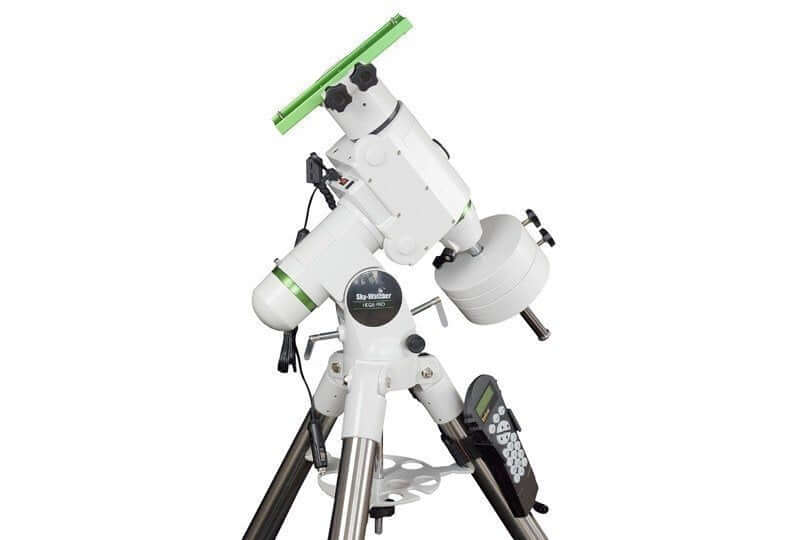
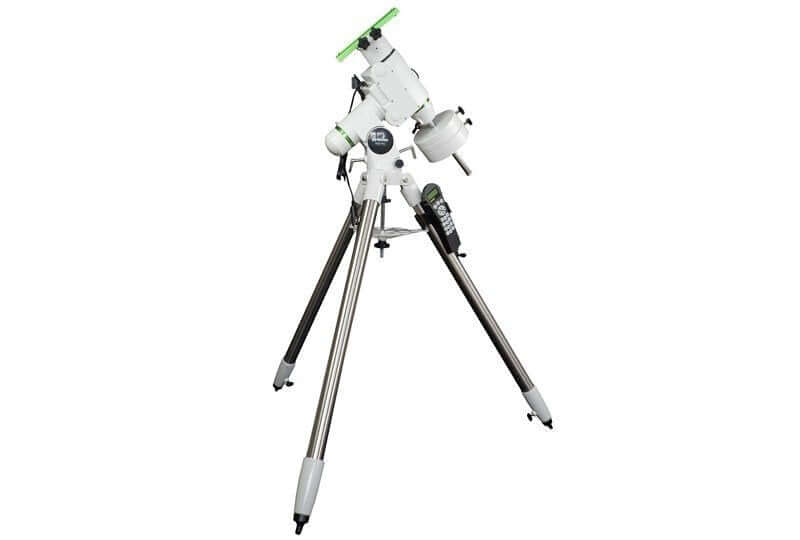
Equatorial mounts are the reference standard for astrophotography: polar alignment enables precise single-axis tracking, eliminates field rotation and allows long exposures. EQ goto versions add automatic pointing and object catalogue management, making every session more productive.
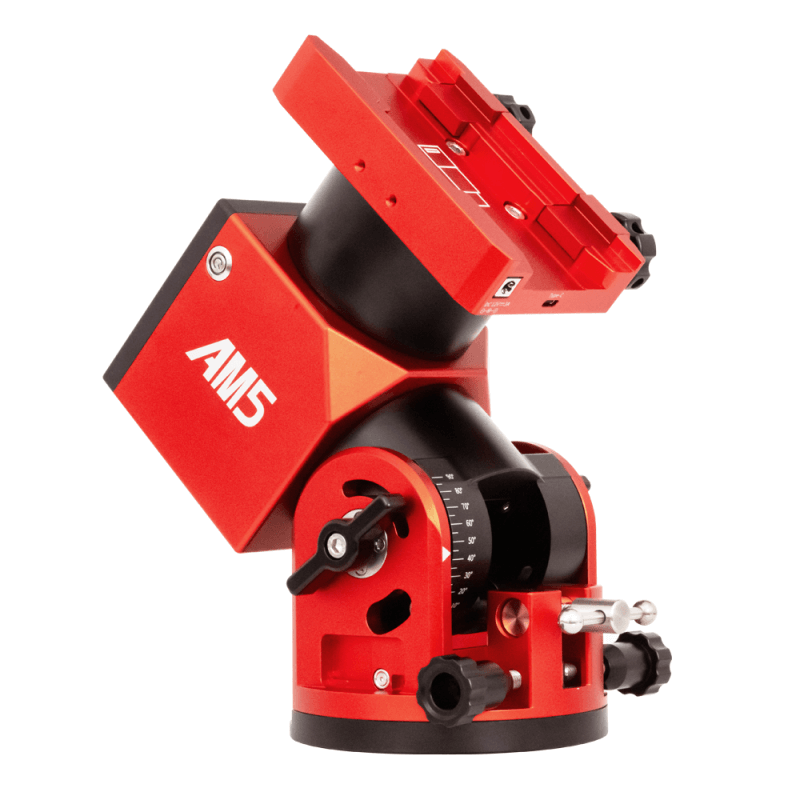
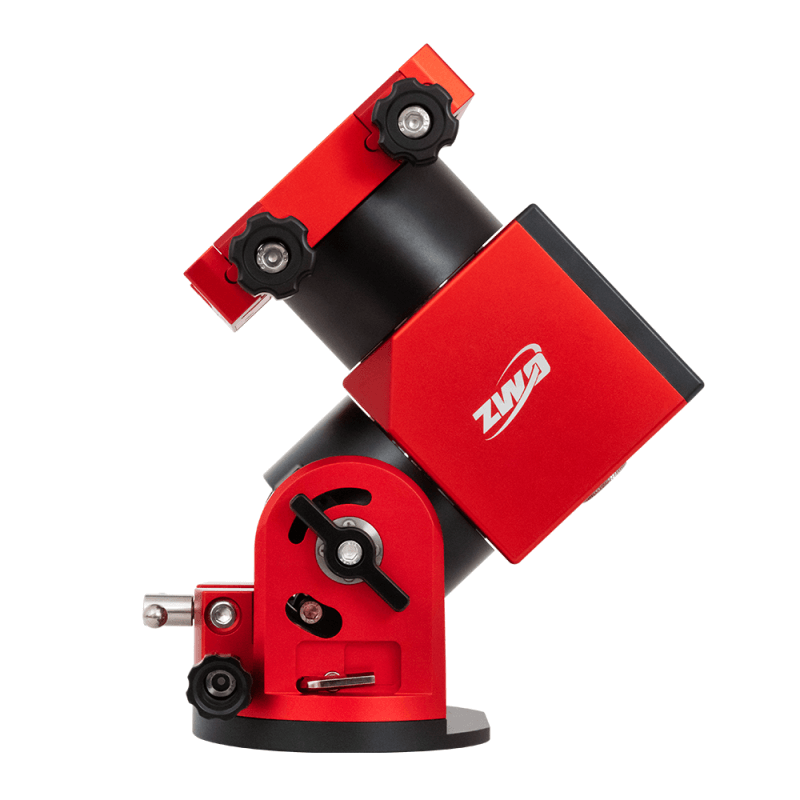
Harmonic drive mounts represent the most recent evolution: backlash-free transmission, very high tracking precision, no counterweights required and a total weight of just a few kilograms. They are the ideal solution for those who want to pursue serious astrophotography on the move, paired with lightweight astrograph tubes and OSC or monochrome cameras. Compared to traditional equatorial mounts they offer faster setup and minimal bulk; payload capacity is lower than a classical EQ at the same price point, but sufficient for the compact tubes most widely used in portable imaging today.
How to choose:
- Occasional visual observation → manual or goto altazimuth mount
- Systematic visual observation → computerised altazimuth or equatorial mount
- Planetary astrophotography → motorised equatorial mount, even entry level
- Deep-sky astrophotography from a fixed site → equatorial goto mount with adequate payload
- Deep-sky astrophotography on the move → harmonic drive mount with a lightweight tube